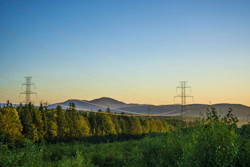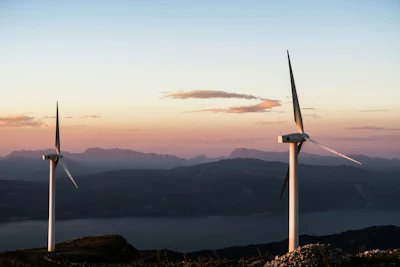

Walk the trails along the Rocky Mountain Greenway just outside Boulder, Colo., and the view looks a little different from just a few months ago. While the Rockies off in the distance are still crystal clear, the nine wind turbines that have stood beside them since 1977 are now four.
The turbines belong to the National Laboratory of the Rockies (NLR), a research hub formerly known as the National Renewable Energy Laboratory (NREL). The lab has retired turbines before as equipment aged, but those were typically replaced with newer systems. This is the first removal since the name change, and it’s unclear whether the five just decommissioned will be replaced.
This is one of several recent setbacks in the renewable energy sector. According to a report from Colorado Public Radio (CPR) News, NLR’s press releases now focus on data centers and grid resilience while almost entirely omitting wind and solar energy initiatives. Given the lab’s role in advancing both, it’s worth understanding what’s changing and why.
NLR: A brief history
Wind energy research first began at NLR’s location in the foothills between Golden and Boulder in 1976. The area is large, clear, and flat and experiences strong wind gusts, making it a popular choice for the U.S. Department of Energy (DOE)—formerly known as the Energy Research and Development Administration.
Seventeen years later, in 1993, the site was officially named the National Wind Technology Center (NWTC)—it was considered the premier site for accelerating wind energy development. For the next three decades, the site began testing other technologies, including solar energy, energy storage, and systems that can harness electricity from ocean waves. In 2019, the DOE renamed the site the Flatirons Campus.
The Flatirons Campus is a separate location from NLR’s main campus in Golden. It is located about 25 miles north of the South Table Mountain Campus, where most of NLR’s research is done.
In the 2027 fiscal year, congress appropriated less funding for solar, though funds are still going to the DOE for solar and wind. In the past, a chunk of that funding typically went to NLR, but it’s not clear how the funds have been spent over the last two fiscal years.
Where the administration stands on renewables
President Trump has long opposed turbines; according to a report from Columbia University, he even testified in front of the Scottish Parliament against wind farms in 2012. His 2024 presidential campaign also asked for and received donations from fossil fuel interests, and he placed executives from the sector in policymaking roles.
Among them is Energy Secretary Chris Wright, a Denver native and former fracking executive, who echoes that view. He has argued that weather-dependent energy sources are more expensive and strain the grid.
“They take an enormous amount of additional transmission lines to connect their large land, far-flung production back to where there’s demand centers,” Wright said in a press release statement. “And what we do get for that is a relatively small amount of low-value energy. It’s low value because the wind doesn’t always blow and the sun doesn’t always shine.”
Battery storage is also expanding rapidly, allowing wind and solar to deliver power more continuously.
The administration’s stance has affected projects. According to a report from WBUR, five wind projects in Massachusetts, Connecticut, Rhode Island, New York, and Virginia have paused construction.
The companies sued. Preliminary injunctions got construction moving again, and one project has already started delivering power to the grid.
Why NLR’s situation is different
NLR is a federally owned lab that takes direction from DOE, not a private developer, so it has no lawsuit to file. Its future depends on federal funding decisions. The lab’s wind and solar research is funded through the Integrated Energy System’s office. Most projects are funded in three-year cycles, and the current one ends in 2027. Whether the administration continues to fund the lab’s wind and solar portfolios will determine what happens to staffing positions.
“Depending on the year and what we have going on, we would spend in the neighborhood of $70 million a year at a place like NLR,” says one former DOE official. “Now today, when you look at budgets being cut dramatically, the amount of money that’s left over is minimal.”
For now, the official says, research funded in 2024 is still underway. It may not be officially published, but the work has been rescoped. Without new funding, there will either be more layoffs or more people moved away from solar and wind to other areas.
Until the next funding decision, the view from the greenway shows four turbines where there used to be nine.