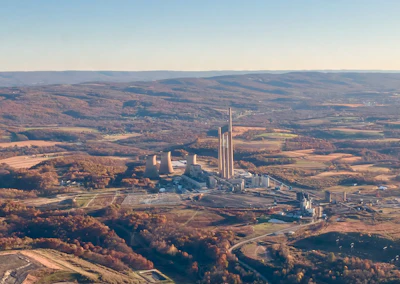
The nation’s electric power sector plans to retire 6.4 GW of coal-fired generating capacity in 2026, according to the U.S. Energy Information Administration. While economic shifts or regulatory decisions may change those plans, legacy coal properties are now being viewed as ready-made opportunities for clean energy projects.
Case in point: The Homer City Generating Station, where a 4.5 GW natural gas complex will occupy the location of a shuttered Pennsylvania coal facility. Led by Homer City Redevelopment (HCR) and Kiewit Power Constructors, the $10 billion generating project will support a data center campus on 3,200 acres about 50 miles east of Pittsburgh.
Per the developers, the project includes links to the PJM Interconnection and New York Independent System Operator grids. The site will also connect with FirstEnergy Pennsylvania Electric’s system in PJM.
Boasting grid connections, heavy industrial zoning and pre-existing transmission lines, former coal plants are ideal spots for new energy infrastructure, said Hannah Wiseman, a faculty member of the Institute of Energy and the Environment at Penn State University.
Hundreds of ex-industrial sites, power plants, and landfills nationwide have been repurposed to welcome solar, biomass, landfill gas, wind, and energy storage – researchers at Penn State’s Center for Energy Law and Policy mapped dozens of these locations, including six refurbished coal plants stretching from Hawaii to Massachusetts.
“We are seeing this shift because coal is no longer the cheapest form of energy in the U.S.,” said Wiseman. “Natural gas is cheaper than coal, as are solar and wind in many parts of the country. And coal-fired power plants are more expensive to operate due to environmental regulations limiting particulate matter.”
New energy generation is rising alongside electricity requirements for AI-driven data centers. According to a 2025 U.S. Department of Energy report, data centers could harness 6.7% to 12% of all U.S. electricity by 2028, up from 4.4% in 2023. Fast data center buildouts make favorable zoning and existing grid hookups especially appealing, said Wiseman.
“Those are like gold for developers,” she said. “Many data centers and energy facilities are facing moratoria or zoning denials from local governments due to residents' concerns about impacts of this development. Avoiding a new land use approval speeds up a project, or even allows a project to proceed when it otherwise would have been denied.”
Location, location, location
Homer City has space for a development that includes both data centers and large-scale power usage. Having already operated steam turbines for coal production, the plant has the water capacity needed to keep data center servers cool, said Wiseman.
Meanwhile, GE Vernova will supply the campus with seven hydrogen-enabled, gas-fired turbines, with the first deliveries expected to begin this year. The full facility is scheduled for completion until July 2028.
Once finished, the complex will reduce greenhouse gas emissions by 60%-65% per megawatt hour compared to the former coal plant, said Amit Kulkarni, vice president of product management for GE Vernova’s gas power business. (HCR and Kiewit declined comment for this story.)
“Our selection in 2025 for the Homer City redevelopment project highlights our role as a comprehensive technology partner, moving beyond the delivery of hardware to provide integrated energy solutions,” Kulkarni said in an email. “By pairing this equipment with an extensive long-term service agreement and continuous digital monitoring, we are helping establish the foundation for a highly reliable, dispatchable asset capable of supporting the scale and stability required by Pennsylvania’s grid and data centers.”
Siting new energy projects on brownfields and previously developed land makes them more palatable to policymakers and residents alike, said Wiseman. Abundant natural gas from the Marcellus Shale formation also makes Pennsylvania a primary target for data center developers, she added.
“That’s a fuel that’s ready to go, and there’s plenty of it,” Wiseman said. “For communities concerned about data center growth, the use of brownfields sets a good precedent. A data center may come in despite community opposition, so putting them on a disturbed site is better than farmland, or a valuable wildlife habitat.”
A blueprint for success?
Project heads Kiewit and HCR report that the planned facility will be the largest gas-fired plant in the country. Fuel for the complex will be supplied via the interstate Texas Eastern gas pipeline system, supported by a $5 million state grant.
Repurposing one-time coal sites is not without risk, chiefly the spread of toxic coal ash, which developers aim to address through an on-site containment zone. Many abandoned industrial locations are governed by the Comprehensive Environmental Response, Compensation, and Liability Act, or CERCLA, as well as the Surface Mining Control and Reclamation Act, which requires removal of pollution prior to site reuse.
If successful, the Homer City station could be a blueprint for similar campuses nationwide, where “repurposed energy” is supported by financial incentives and prohibitions for building on greenfields, noted Wiseman.
“States such as New Jersey and Massachusetts already offer ‘adders’ and similar financial bonuses for renewable energy developers using disturbed lands,” Wiseman said. “States and the federal government should provide similar financial incentives for data centers building on brownfields, and should consider restricting such development on undisturbed lands.”