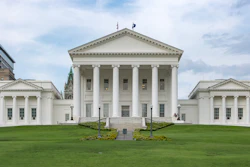

In response, Hunt has co-sponsored a bill that both bypasses the federally-run BPA and hastens upgrades to an aging electrical grid. In March, Washington Gov. Bob Furgeson signed Senate Bill 6355, a law creating the Washington Electric Transmission Authority.
Spearheaded by Sens. Hunt and Claudia Kauffman, the bill passed with bipartisan support as well as backing from environmental groups and labor unions. As an independent state entity, the authority can plan, site and finance energy transmission infrastructure that has been languishing for years, said Hunt.
“The bill came about because we were seeing pressure on the grid, and it was hitting peoples’ pocketbooks with increased electric rates,” said Hunt, a Democrat serving the state’s 5th Legislative District. “We have a higher population and a higher load with data centers that are putting a strain on our grid. This was a timely opportunity to take matters into our hands and pass this bill.”
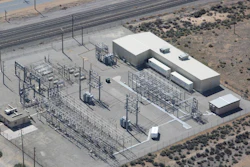
SB 6355 establishes the authority and clears obstacles to new transmission capacity. Once up and running in early 2027, WETA will identify renewable energy pockets – like the largely untapped Cascade Mountains crossing - while managing the siting and permitting of new projects. The authority will also partner with utilities and developers to accelerate project timelines and improve system efficiency, added Hunt.
WETA aims to clear grid infrastructure barriers that lawmakers say are blocking the state’s Clean Energy Transformation Act climate goals. With Washington committed to a greenhouse gas-free electrical supply by 2045, simply waiting on the BPA to fund new substations and transmission lines was not an option, Hunt said.
A 20-year permitting battle that delayed the 16-mile Energize Eastside transmission line upgrade highlights the exact gridlock WETA is designed to prevent. Alongside its permitting abilities, the authority is granted eminent domain as a last resort to secure land for power projects, added Hunt.
“There have been permitting processes that took more time and money than expected, which ended up costing ratepayers,” Hunt said. “The authority will identify areas where we need to do reconductoring or add transmission lines. Then we’ll work with agencies and other utilities along the corridor to streamline permits and acquisition.”
A more resilient grid
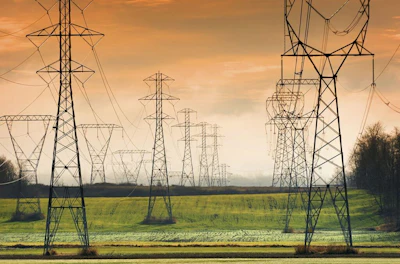
Driven by rising demand, aging infrastructure, and extreme weather, the U.S. must add 5,000 miles of high-capacity transmission lines annually to keep power reliable and affordable, according to the National Caucus of Environmental Legislators (NCEL).
Running major transmission projects through the Pacific Northwest presents unique geographical challenges, due to mountainous terrain along with millions of acres of heavily forested land. Supporting energy storage and other non-wire alternatives is another pillar of the newly established authority.
Action must be taken now, due to regional energy demand projected to spike by 30% in the next decade, the NCEL said in a statement to Energy Daily. Data center expansion, high-tech manufacturing, and widespread building and transportation electrification are fueling this surge in demand.
In backing the authority, the Washington, D.C.-based environmental nonprofit forecasts the loosening of a power grid bottleneck.
“The Bonneville Power Administration, which operates the vast majority of the transmission in the Northwest (around 75%), conservatively approaches new builds to avoid over-exposure to new debt, which has resulted in them building only one mile of transmission in the last five years,” said NCEL.
The group joins a chorus of organizations that predict rolling blackouts if electricity requirements aren’t met. Earlier this year, the Western Electricity Coordinating Council warned of potential “loss of load events” in which demand for electricity exceeds supply. Damaging grid emergencies could strike as early as 2028, the council said.
Dedicated funding for new transmission assets can relieve this stress, said Hunt, the Washington senator. Grid infrastructure can be financed through fees, federal funds and legislative appropriations, with SB 6355 also establishing payments to local governments that host high-voltage expansions.
“Let’s have a more resilient grid that’s less vulnerable to blackouts,” said Hunt. “We can connect renewable energy projects to the grid, which we have not seen in the last decade. More projects would be a big win for us, and show momentum and positive change.”
In the interim, Hunt hopes to see other western states establish independent power bodies to help improve the modern grid. New Mexico launched its Renewable Energy Transmission Authority (RETA) in 2007, while Colorado started its own authority in 2021. Oregon is considering its own model as well, potentially giving the Washington authority additional leeway to manage large-scale transmission across state lines, Hunt said.
“Given how interconnected our energy systems are, the more we can coordinate, the better,” said Hunt.