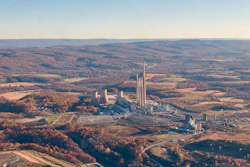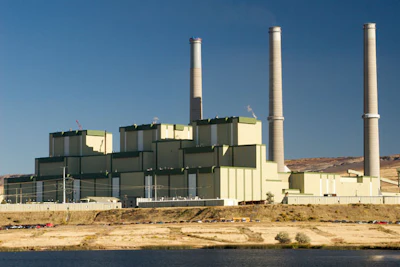
Federal officials have once again pushed back the closure of Colorado’s Craig Station coal facility, with the U.S. Department of Energy extending an emergency order to keep the plant running until year’s end.
Unit 1 at Craig Station was originally slated for retirement at the end of 2025, before a DOE directive in December delayed the shutdown. Unit co-owner Tri-State Generation and Transmission Association will heed the latest extension, taking the same approach it did with prior federal directives, said public relations specialist Mark Stutz.
“We will comply with the order to ensure Unit 1 is available to operate, as we have done with the previous three federal energy emergency orders,” Stutz said in an email to Energy Daily. “Tri-State is not providing day-to-day operational details on the Craig Generating Station Unit 1, as generator-specific market performance information related to the unit is confidential.”
A legal challenge from a coalition of Colorado public organizations seeks to strike down the order, noting it was issued without requests from Craig’s co-owners or state regulators. Utilities including Tri-State and the Platte River Power Authority were also denied a rehearing on the December 2025 emergency order, following a decade of preparation to permanently close the unit.
“We have planned for the retirement of this resource and have proactively replaced the capacity and energy from new sources,” said Jason Frisbie, general manager and CEO of Platte River, in a January 2026 statement. “While Platte River will continue to comply with federal law, we disagree with the need to keep the plant open.”
A petition to overturn the emergency order was filed in the D.C. Circuit Court of Appeals by California environmental law organization Earthjustice, as well as Vote Solar, a nonprofit headquartered in Oakland. Among the local challengers is 350 Colorado, an environmental policy and advocacy organization tracking statewide utility decarbonization.
Bobbie Mooney, a staff attorney and director of the group’s Beyond Oil & Gas Campaign, said political motivations - not actual power reliability needs - are driving the federal orders.
“It doesn’t make sense, because Craig agreed that it’s time to shut down the plant,” Mooney said. “Operators and the state and local community were on board, but the DOE flip-flopped. It feels like the decision is more an empty political stunt than sound strategy.”
One battle after another
The Trump administration has issued similar directives for several U.S. coal plants, arguing utilities shouldn't retire reliable fossil-fuel generation for renewable energy.
“[We] will continue taking action to ensure we don’t lose critical generation sources,” energy secretary Chris Wright said in September. “Americans deserve access to affordable, reliable and secure energy to power their homes all the time, regardless of whether the wind is blowing or the sun is shining.”
The government’s latest intervention in Colorado comes as state utilities work toward mandated 80% reductions in power-sector greenhouse gas emissions by 2030. Meanwhile, advocacy groups are looking to successful attempts elsewhere to strike down the emergency decree – in September, the U.S. Court of Appeals overruled an emergency order at the J.H. Campbell Generating Plant, in West Olive, Michigan.
Mooney said that decision could set a precedent for other ongoing 202(c) proceedings, including the one at Craig Station. Rulings are also pending for the Eddystone Generating Station (Pennsylvania), the TransAlta Centralia Plant (Washington), the Schahfer and F.B. Culley Generating Stations (Indiana), and the Stanton Energy Center (Florida).
According to the Georgetown Climate Center, DOE emergency orders have already cost rate payers hundreds of millions of dollars in avoidable expenses.
“The orders have also resulted in increased air emissions, including carbon dioxide, sulfur dioxide, nitrogen oxide, and fine particulate emissions that are linked to early death, premature birth, and other harmful impacts,” climate center officials said.
‘More unnecessary pollution’
Ultimately, there is no real reason to keep these “old, dirty” facilities burning past their scheduled retirement dates, said Mooney.
“The plan is to challenge this in court, because none of the current orders in Colorado, Washington, Indiana, and Florida demonstrate that continued operation is needed,” Mooney said. “We believe the DOE should stop issuing these orders. It just means more unnecessary pollution, and coal plants are one of the largest resources of greenhouse gas.”
350 Colorado and its allies will spend the rest of 2026 exposing the flawed federal mandates and warning the public about coal emissions. Mooney’s group is also lobbying state legislature to pass stricter emissions bills, hold polluters accountable, and limit ongoing fossil fuel use.
“Again, the legal strategy is our No. 1 goal with this, and we’re already seeing successful challenges in states like Michigan,” said Mooney. “We’re looking to hold the administration accountable to facts and the law, which are on our side, and build more grassroots support for smart energy policy.”