Both James Hiatt’s father and grandfather worked the oil refineries of Lake Charles, Louisiana, returning from long shifts with the smell of crude on their clothes. With oil the engine of the southwest Louisiana economy, Hiatt followed suit, even as he commuted to the refinery every day by hybrid.
“I couldn’t imagine you could fight these [oil companies] – we were raised around the industry, and put up with the mess,” said Hiatt. “We believed we wouldn’t have Lake Charles without this industry, which was not true.”
Today, Hiatt is founder of For A Better Bayou, a community-based group now pushing back against liquid natural gas projects in Cameron Parish, which stretches from Lake Charles’ southern outskirts to the Gulf of Mexico. Hiatt, a father of three, is worried about the country’s reliance on fossil fuels, an issue that hit home with the construction of LNG export terminals.
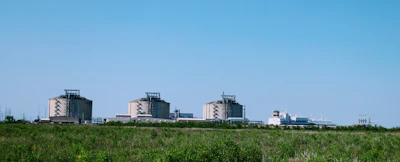
Built to super-cool natural gas into liquid cargo for ocean-going tankers, these facilities are deemed by detractors as a primary source of methane and carbon dioxide pollution. According to a 2024 Cornell University study, LNG’s carbon footprint is one-third larger than coal.
“The emissions of methane and carbon dioxide released during LNG’s extraction, processing, transportation and storage account for approximately half of its total greenhouse gas footprint,” the study said. “ Even on a 100-year time scale, the liquefied natural gas carbon footprint equals or still exceeds coal.”
Three of the nation’s seven gas export terminals operate in southwest Louisiana, with at least another four planned along the Calcasieu River in Lake Charles. Louisiana’s Industrial Tax Exemption Program (ITEP) spares LNG facilities from up to 80% of local property taxes. When paired with deep-water access and an existing pipeline infrastructure, the regional pull for these companies is irresistible, said Hiatt.
Nor does that take into account the truncated public comment period provided for these projects from agencies like the U.S. Army Corps of Engineers. As just one example, residents had only ten days to comment on a liquefication unit on the Louisiana/Texas border, Hiatt added.
“If you’re not on top of these comment deadlines, you forfeit the ability to litigate,” Hiatt said. “These agencies should be working for the people.”
Years of frustration
The rapid growth of LNG export terminals in state has sparked safety concerns as well as fear of negative environmental and economic impacts. Anthony “Tad” Theriot, who has been shrimping and harvesting oysters in Cameron Parish and its environs for three decades, estimates he’s lost over $450,000 from LNG activity.
Theriot is one of several commercial fishers suing LNG giant Venture Global, claiming that dredging for a new terminal caused sediment spills that killed millions of oysters and reduced shrimp, crab and finfish harvests.
“It’s devastated inland fishing,” said Theriot. “[The catch] has gone down three-quarters from what I was normally catching. I made $325,000 the year before Venture Global came in, and that’s gone down every year since. I made $57,000 last year, and it will be just as low this year.”
Venture Global, which operates an LNG facility in Cameron Parish, is currently enlarging a channel near Calcasieu Lake to allow tankers access to the forthcoming Calcasieu Pass 2 LNG terminal, called CP2. As one of 20 plaintiffs in the July 30 lawsuit filed in the 38th Judicial District Court, Theriot said dredged sediment caked his oysters in mud, killing them or leaving them unsellable.
Though offered a six-figure settlement by Venture Global, that figure is less than half the value
of Theriot’s 750,000 destroyed oysters, he said. Meanwhile, he remains frustrated that the company has faced virtually no governmental pushback since arriving in the region.
“They have been here for six years and nothing has changed,” Theriot said. “I put two kids through college on a shrimp boat. I made a decent living at what I was doing, but you can’t anymore, and it’s not just me. There’s fishers, crabbers and oyster fishermen, and everyone is struggling.”
The battle continues
As the new lawsuit percolates, a federal appeals court upheld the Federal Energy Regulatory Commission’s approval of CP2’s construction in Cameron Parish. Groups including For a Better Bayou argued that FERC did not sufficiently account for the impact of the facility, a claim the U.S. Court of Appeals for the D.C. Circuit denied.
Despite the damaging spill of dredging material from the CP2 site, the court ruled that FERC acted lawfully when it approved the CP2 terminal and CP Express pipeline, seconding FERC’s claim that the project “would have a ‘moderate, but not significant impact on commercial fishing.’”
(FERC director of media relations Celeste Miller declined comment for this story, citing pending proceedings on CP2.)
Recent legal setbacks have not stopped Hiatt and other area advocates from raising awareness about the harms of LNG expansion. The For a Better Bayou founder said that corporate tax breaks handed to developers should be redirected into public infrastructure, like rebuilding a Cameron Parish hospital destroyed by Hurricane Laura in 2020.
“I want to build people power without the agenda of climate change, which people around here say is a hoax,” Hiatt said. “We are advocating for climate, environmental and economic justice. People think these LNG groups are too big to fail. We’ve worked with a broad base that includes MAGA folks and tree-hugging leftists, but we all want clean air, and a future for our children and generations to come. We’re tired of [our leaders] subsidizing billion-dollar corporations.”